
Seoul is often remembered for its speed and energy.
Here, you encounter its silence.
If you’re looking to slow down and engage with a deeper layer of the city,
Seosomun Shrine History Museum is well worth your time.

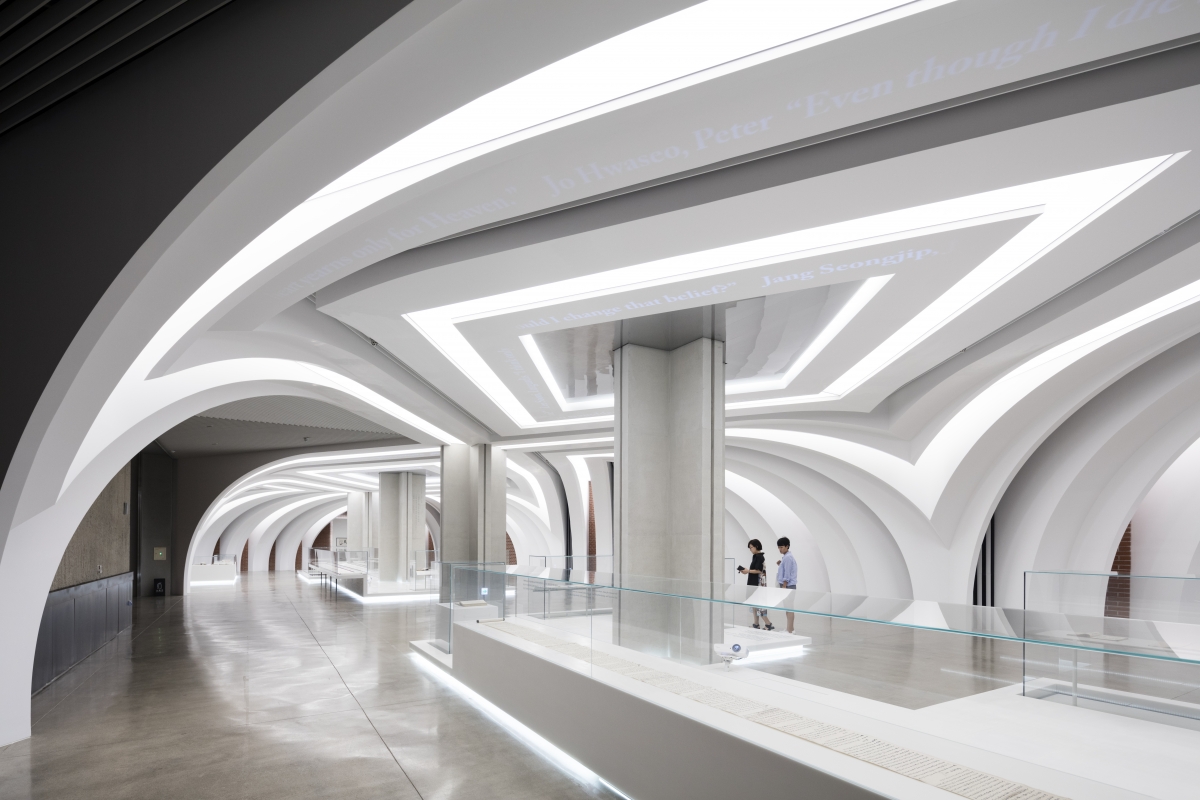

In the middle of downtown Seoul, surrounded by office towers and traffic, stands a space that feels unexpectedly quiet. On the surface, it appears to be a contemporary architectural landmark. Beneath it lies one of the most historically significant sites in modern Korean history.
After ten years of documenting Seoul as a travel blogger, I can confidently say: Seosomun Shrine History Museum is less of a tourist attraction and more of a contemplative experience.
Why It’s Special
1. Built on an Actual Historic Site
This was once an execution ground during the Joseon Dynasty. It is particularly known as a site where many Catholic martyrs were executed during periods of religious persecution.
This is not a recreated narrative—it is a museum constructed directly on a real historical site, carrying deep symbolic weight.
2. Architecture as Narrative
The museum is largely underground. Natural light filters in subtly, exposed concrete surfaces create a restrained atmosphere, and the spatial flow encourages stillness rather than spectacle.
Instead of dramatic displays, the architecture communicates through silence, scale, and controlled light.
3. Beyond Religion — A Story of Human Rights
While the museum addresses Catholic persecution, the broader themes are universal: oppression, conviction, freedom of belief, and human dignity.
You do not need to be religious to find the experience meaningful.

What to Look For
- The Sunken Plaza – An open public space connecting the city above with the museum below. A peaceful urban retreat.
- Permanent Exhibition Hall – Focused on late Joseon-era persecution and historical documentation.
- Special Exhibitions – Occasionally features contemporary art and human-rights–related themes.
- Meditative Spaces – The sound-insulated structure makes you forget you are in the center of Seoul.
Who Should Visit
- Travelers who prefer quiet, reflective spaces over crowded landmarks
- Visitors interested in modern Korean history beyond palaces and shopping districts
- Architecture and spatial design enthusiasts
- Anyone exploring City Hall, Deoksugung Palace, or Myeongdong who wants a meaningful pause in their itinerary
Editor’s Tips
– Visit in the morning for a quieter atmosphere.
– Allow around 1.5 hours if you read the exhibitions carefully.
– Because the subject matter is emotionally heavy, schedule it between lighter activities.
– Photography may be restricted in certain areas—follow on-site guidance.
– Seoul’s midsummer heat is famously intense, isn’t it? When the weather becomes overwhelmingly hot and exhausting, stepping into this museum feels like entering a refreshingly cool sanctuary. It’s almost like a small slice of heaven in the middle of the city.
Admission Fee
Free admission to the permanent exhibition. (No reservation)
Special exhibitions may require a separate ticket, depending on the program.
Policies for temporary exhibitions or special events may change, so please check the official website before you visit.
Parking
Public parking lot in the building (Yay!)
30 min / 2,000 KRW
60 min / 3,800 KRW
120 min / 7,400 KRW
240 min / 14,600 KRW
*Credit card pay only
Location & Accessibility
Address
16-4 Uijuro 2(i)-ga Jung-gu Seoul 
Opening Hours
Tuesday -Sunday 9:30 – 17:30 Closed on Mondays
Representative number: 02-3147-2401
Mass Times
Seong Jeong Ha-sang Memorial Hall
Sunday 11:00 / 15:00
Situated in Jung-gu, between Seoul Station and City Hall, the museum is easy to incorporate into a central Seoul walking route.
It pairs well with visits to Deoksugung Palace or a stroll through nearby neighborhoods.
Editor’s TIps
The most convenient way to reach the museum is to exit Seoul Station (Line 1), Exits 1 or 2, or Chungjeongno Station (Line 2), Exit 4, and walk from there.
If you’re interested in exploring the historic Seoul Station building itself, I recommend using the Line 1 exits. There are multiple entrances to the museum. The entrance differs depending on whether you are arriving on foot or entering from the parking garage, so keep that in mind when navigating. Around the exterior of the building, you’ll find sculptures and additional points of interest. You can also see trains passing by on the elevated tracks above ground, which adds an interesting urban contrast to the site.
Inside the museum, there is a gift shop worth visiting, as well as a library space for those who wish to explore the subject matter in greater depth.
