
What You Talk About When You Talk About Haruki Murakami
Exhibition Overview
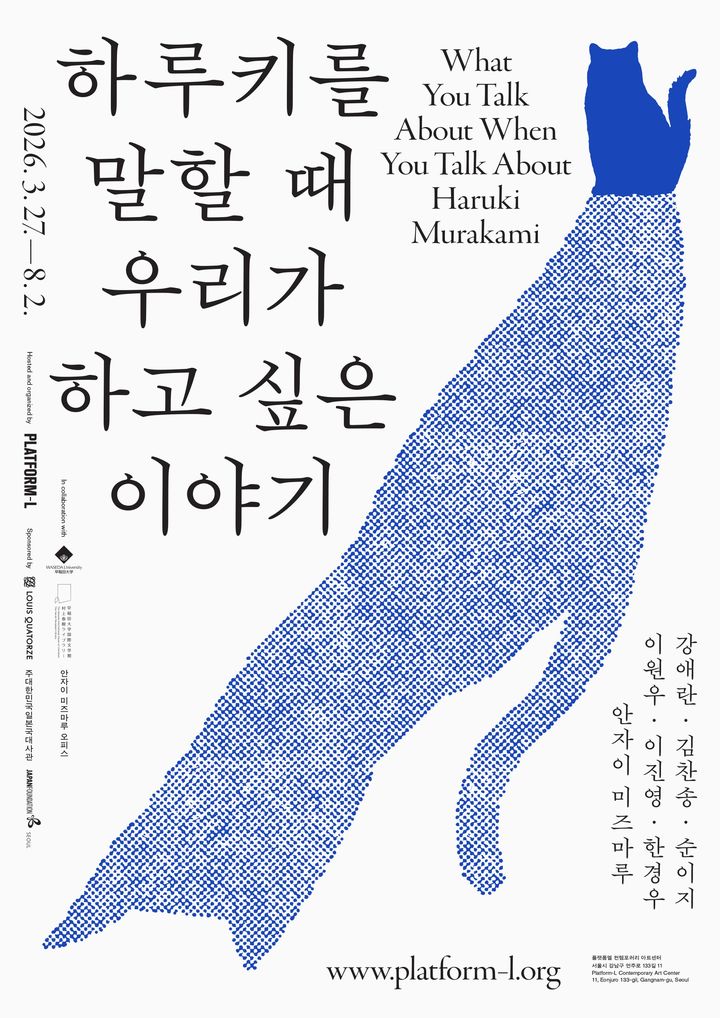
When We Talk About Haruki: The Stories We Want to Tell is a large-scale exhibition inspired by the literary world of Japanese author Haruki Murakami. Rather than simply introducing the writer’s biography, the exhibition explores his themes, sensibilities, and narrative universe through immersive visual and spatial experiences.
The exhibition is presented at Platform-L Contemporary Art Center in Seoul. It is known to include materials and collaborative elements related to Waseda University’s International House of Literature (the Haruki Murakami Library), offering contextual insight into Murakami’s works and literary legacy.
This exhibition marks the first time in Korea that personal items donated by Haruki Murakami to the Waseda University International House of Literature (the Haruki Murakami Library) are being publicly displayed.
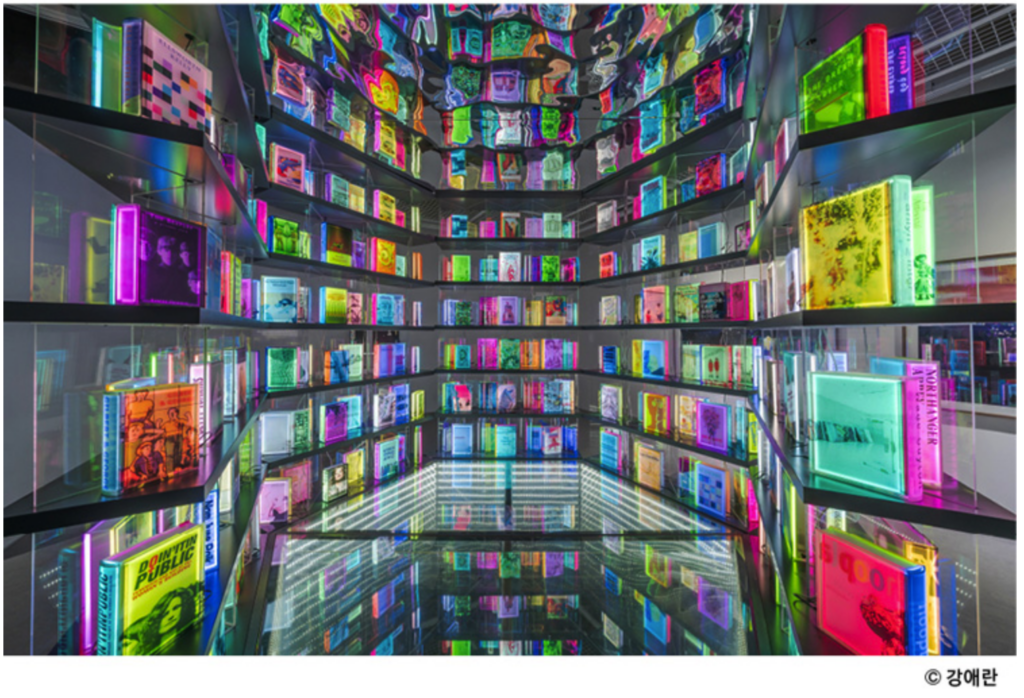
Among the highlights are more than 40 international editions of Norwegian Wood, collected by Murakami himself from countries around the world. The exhibition also features LP records that were actually played at his jazz café Peter Cat(1974–1981), which he ran before becoming a full-time novelist, as well as drawings created by Murakami himself.
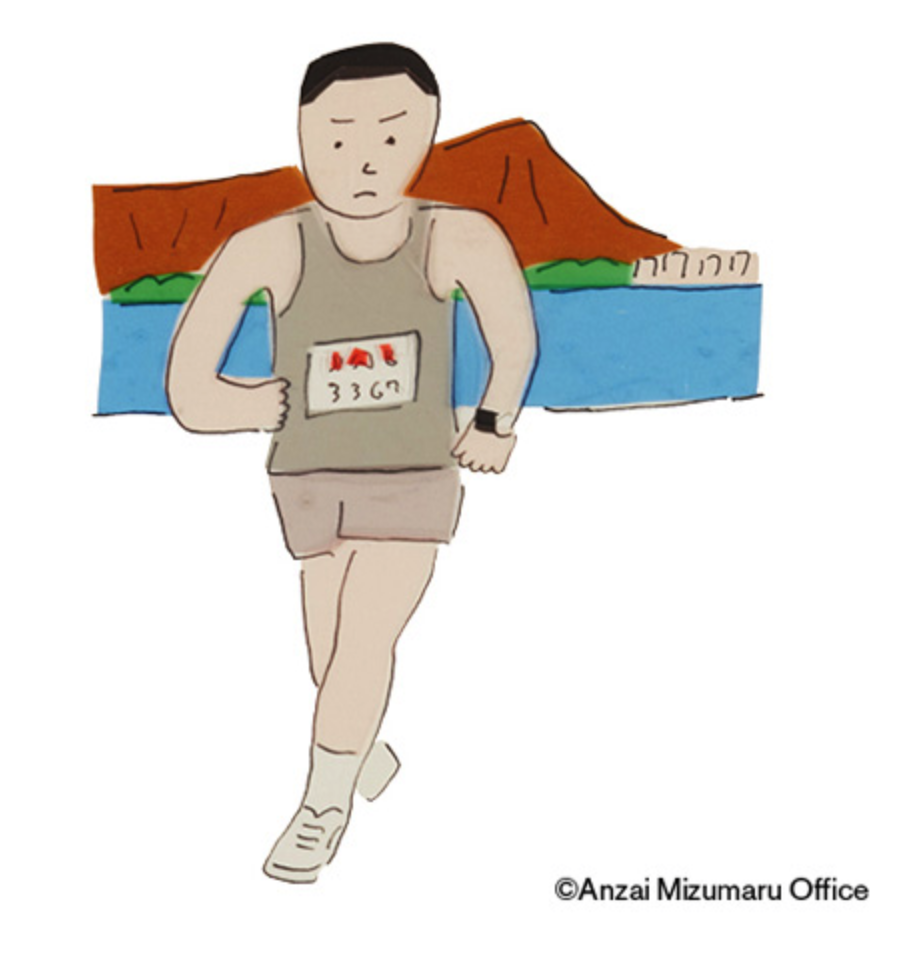
In addition, over 200 original illustrations by Mizumaru Anzai (1942–2014)—Murakami’s longtime creative collaborator—are presented together in this exhibition. Anzai’s visual language played a significant role in shaping the aesthetic atmosphere surrounding Murakami’s literary universe.
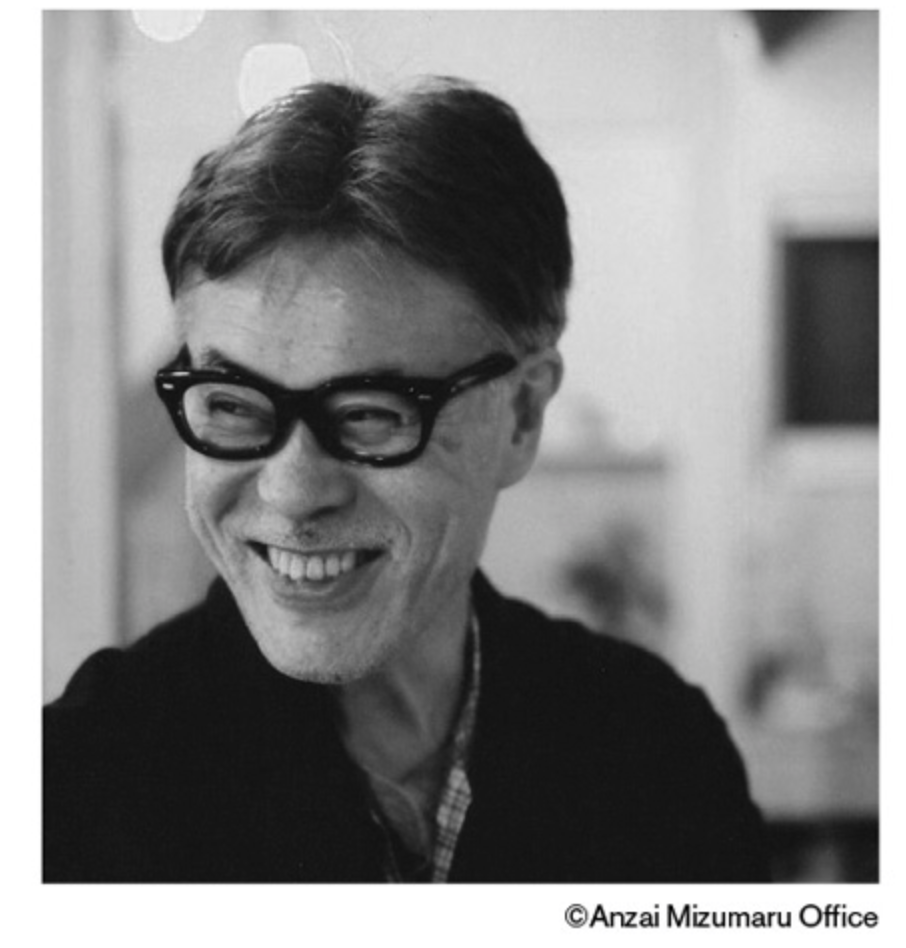
Furthermore, the exhibition invites contemporary Korean artists Kang Ahran, Kim Chansong, Lee Wonwoo, Soon Eazy, Lee Jinyoung, and Han Kyungwoo to reinterpret Murakami’s worldview through painting, installation, and media art. Through diverse contemporary artistic languages, they offer new perspectives on what might be called the “Murakami universe.”
Exhibition Dates
- Exhibition Period: March 27, 2026 – August 2, 2026 (scheduled)
- Every Monday Closed
- Tue-Sun 11:00 – 20:00 (Last entry 19:00)
Please confirm exact opening hours and holiday closures through official announcements before visiting, as schedules may change.
Admission Fees
Ticket prices may vary depending on booking period and discount eligibility.
General Pricing (approximate):
| Category | Price (KRW) | Super Early Price (KRW) |
|---|---|---|
| Adult | 20,000 | 12,000 |
| Child / Youth | 16,000 | 9,600 |
| Concession (e.g., disability discount) | 14,000 | |
| Under 36 months | Free |
Early bird discounts are typically available for a limited time and may vary by ticket platform.
Reservation Methods
Online Booking
- Visit an official ticketing platform (such as NOL Ticket / Interpark or other authorized sellers).
- Select your preferred date, time slot (if applicable), and ticket type.
- Complete payment online.
- Present your mobile ticket or confirmation message at the venue for entry.
Advance booking is strongly recommended, as popular exhibition dates may sell out.
On-site Purchase
Limited same-day tickets may be available at the venue. However, availability cannot be guaranteed.
Location

[NAVER Maps]  https://naver.me/GYDvXs15
Platform-L Art Center
Seoul Gangnam-gu Nonhyeon-dong 85-11
Editor’s Tip
It is located about a two-minute walk from Exit 10 of Hakdong Station on Line 7.
Alternatively, if you are coming from Gangnam-gu Office Station (served by the Suin–Bundang Line and Line 7), you can exit through Exit 3 and walk to the venue.
Visitor Tips
- The exhibition may be closed on Mondays; please confirm in advance.
- Entry times and final admission hours may vary.
- Purchasing tickets early can help secure discounted rates during promotional periods.
Summary
When We Talk About Haruki: The Stories We Want to Tell runs from March 27 to August 2, 2026, at Platform-L Contemporary Art Center in Seoul. Ticket prices vary depending on category and promotional period, and advance online reservations are recommended. Visitors should check official updates for the latest schedule and pricing information before planning their visit.
About Haruki Murakami
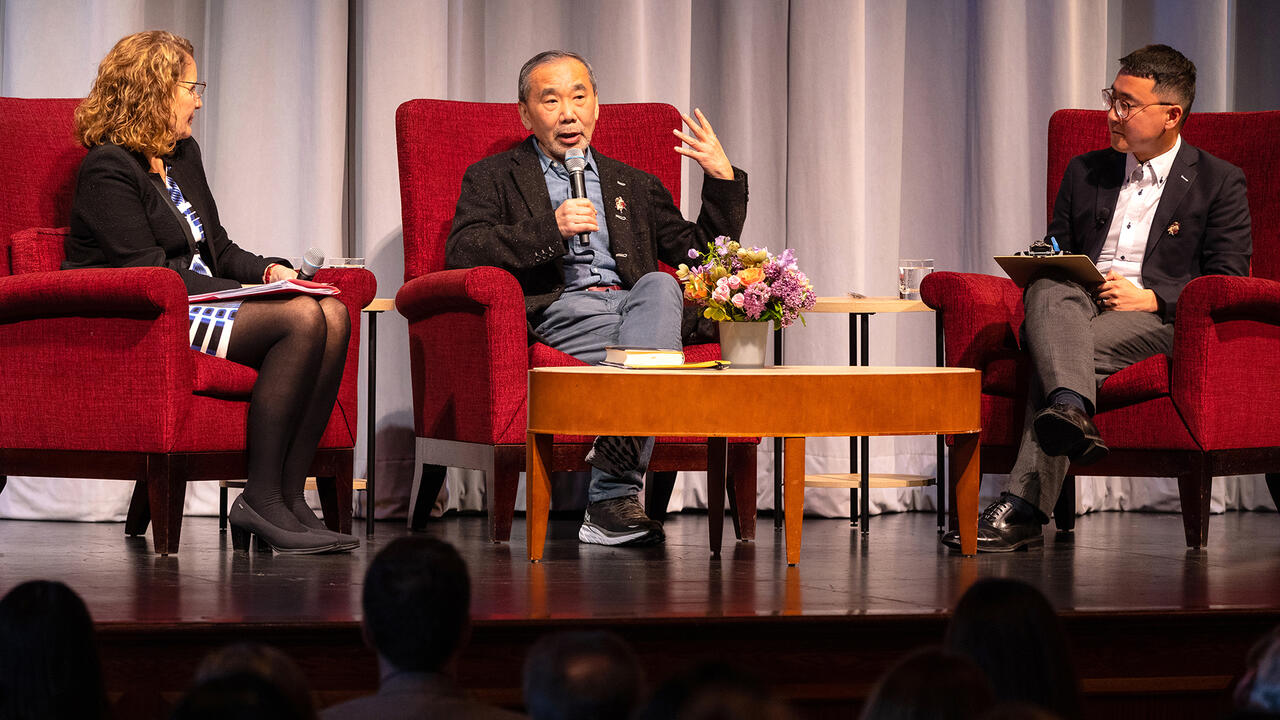

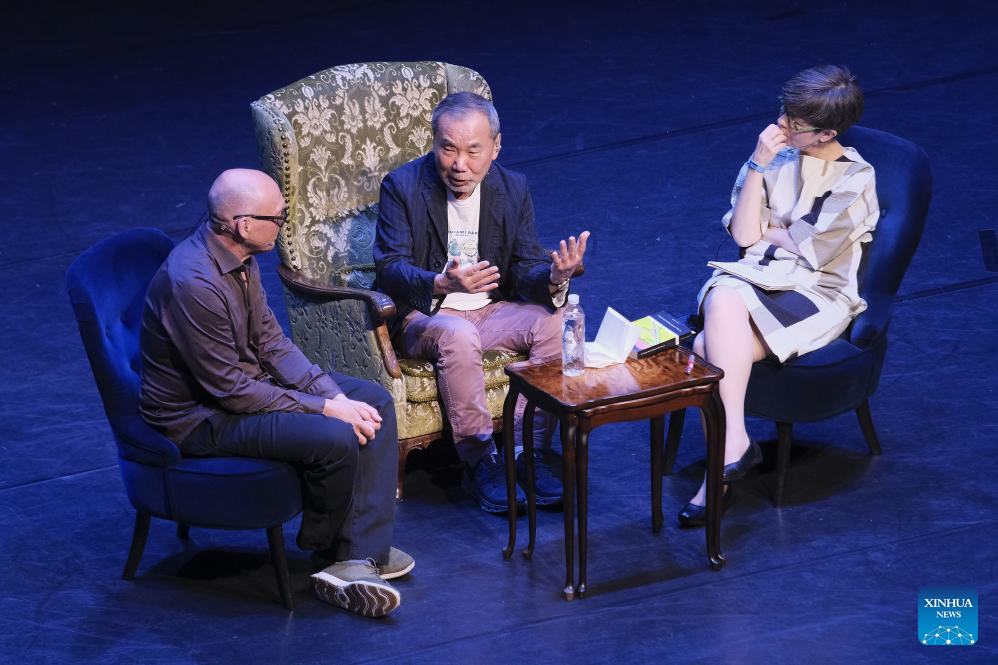
“The Novelist Who Redefined Japanese Fiction for the World”
Few contemporary writers have traveled as far—both geographically and imaginatively—as Haruki Murakami. Born in Kyoto in 1949 and raised in Kobe, Murakami emerged from postwar Japan to become one of the most globally recognized novelists of the late 20th and early 21st centuries. His fiction, steeped in loneliness, memory, music, and surreal rupture, has been translated into more than 50 languages and read by millions worldwide.
Early Life and Literary Awakening
Murakami studied drama at Waseda University in Tokyo. In his twenties, he ran a jazz bar called Peter Cat with his wife, an experience that would later infuse his fiction with an unmistakable musical sensibility. Jazz records, classical compositions, and American pop culture references became hallmarks of his narrative voice.
One of the most frequently recounted episodes in Murakami lore occurred in 1978 at Jingu Stadium in Tokyo. While watching a baseball game, he suddenly felt the certainty that he could write a novel. He went home and began drafting what would become his debut work.
In 1979, he published Hear the Wind Sing, winning the Gunzo Prize for New Writers. From that point forward, he committed fully to literature.
Major Works
Murakami’s bibliography spans novels, short story collections, essays, and translations. Among his most influential works:
Norwegian Wood (1987)
A coming-of-age novel that explores grief, love, and psychological fragility. It became a publishing phenomenon in Japan and introduced Murakami to a vast mainstream readership.
The Wind-Up Bird Chronicle (1994–1995)
A sprawling, metaphysical narrative that intertwines personal loss with wartime memory. Often regarded as one of his most ambitious works.
Kafka on the Shore (2002)
A dual narrative blending myth, metaphysics, and psychological quest. Widely studied for its symbolic depth.
1Q84 (2009–2010)
A three-volume epic set in an alternate reality. The novel cemented Murakami’s position as an international literary heavyweight.
Killing Commendatore (2017)
A meditation on art, history, and hidden trauma.
Editor’s Comment
Even in my childhood, there was a copy of Norwegian Wood at home. At the time, it seemed that almost every household with school-aged children had a copy on their bookshelf.
As I grew older, I found myself drawn to Murakami’s distinctive prose style. I continued reading his work, gradually buying his books one by one.
Today, in many bookstores in Korea, there is often a dedicated section just for Haruki Murakami—clear evidence of how deeply he is loved by Korean readers.
Notable Awards and Recognition
Murakami has received numerous literary honors in Japan and internationally, including:
- Gunzo Prize for New Writers (1979) – Hear the Wind Sing
- Yomiuri Prize for Literature (1996) – The Wind-Up Bird Chronicle
- Franz Kafka Prize (2006)
- Jerusalem Prize (2009)
- Hans Christian Andersen Literature Award (2016)
He has frequently been mentioned as a potential Nobel Prize laureate, though he has not received the award to date.
Public Persona and Cultural Impact
Murakami maintains a famously private lifestyle, avoiding literary cliques and limiting media exposure. He is also a long-distance runner and has written memoiristic essays on endurance and discipline, notably in What I Talk About When I Talk About Running.
Despite his reticence, his influence is vast. Younger writers cite him as a gateway to global literature. Bookstores around the world stage midnight releases for his novels. Academic conferences dissect his symbolism. His works have been adapted into films, theater, and visual art installations.
A Writer Between Worlds
Haruki Murakami occupies a rare space in modern literature: a writer deeply rooted in Japanese sensibility yet unmistakably international. His narratives feel both intimate and borderless. In an era marked by fragmentation and displacement, his fiction continues to resonate with readers searching for meaning in the quiet spaces between reality and dream.
Leave a Reply